May 20, 2026 · Haleem Kherallah
Discover Palestinian Manakeesh
The flatbread that does in the morning what coffee does — and a few things coffee can't.
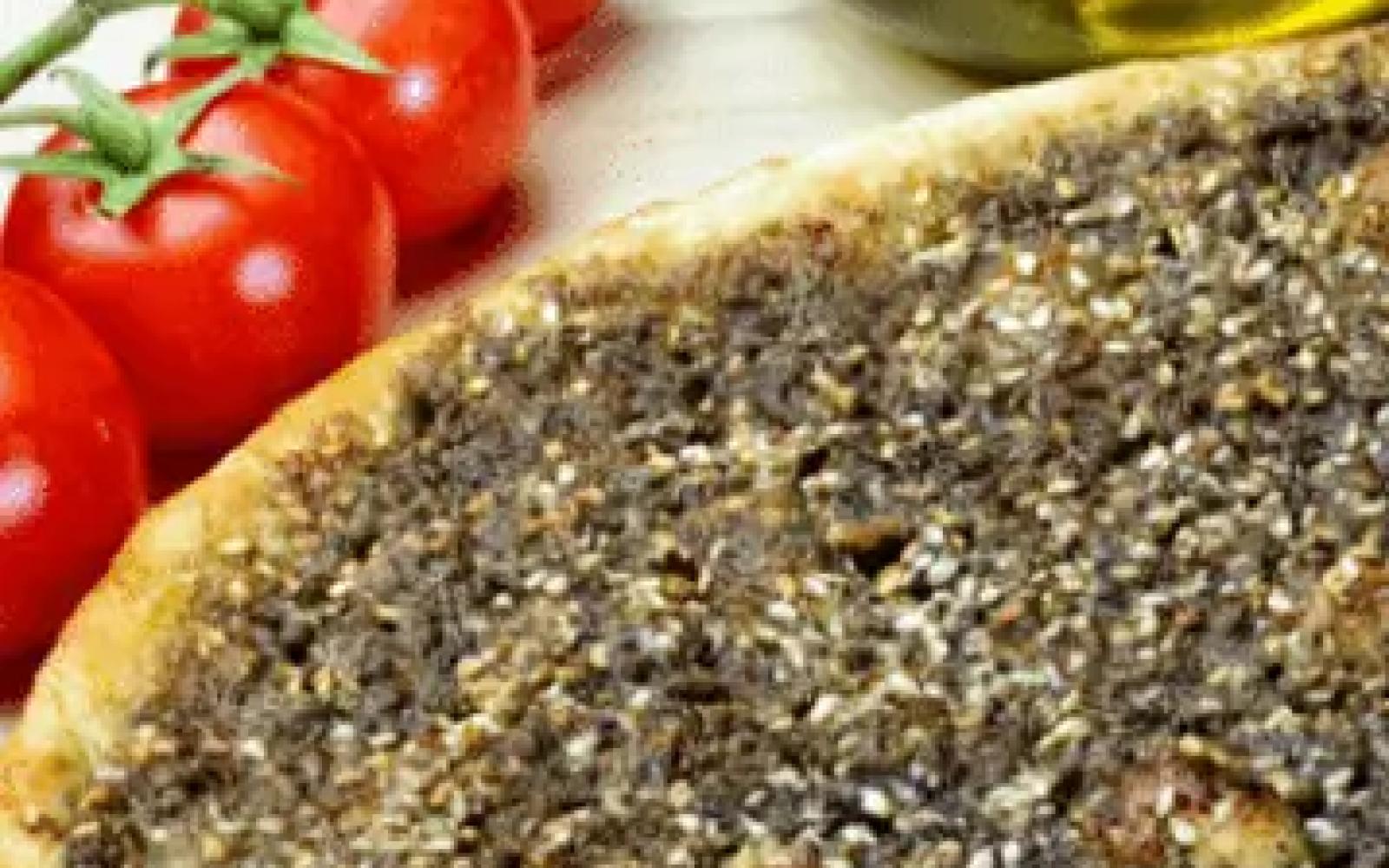
If shakshouka is the Palestinian Sunday lunch, manakeesh is the Palestinian Tuesday morning. A flatbread, baked in a wood-fired oven, topped with za'atar and olive oil — or with cheese, or with minced lamb (then we call it lahm bi ajeen). It is the food a child carries to school in waxed paper, still warm.
The dough is the thing. Bread flour, a pinch of sugar, fresh yeast, water that's lukewarm to the back of your hand, olive oil enough to make it shiny. You leave it for an hour, knock it back, leave it again, shape it thin. The first time you do this it takes the afternoon. By the hundredth you can stretch a perfect round in seven seconds.
Za'atar — the topping the West misunderstands
Za'atar is not "oregano". Za'atar is a wild thyme blend — the herb plus toasted sesame, sumac for sourness, salt — that grows on the West Bank hillsides and is picked in spring. Real za'atar smells slightly green and slightly tart at the same time. Supermarket za'atar usually doesn't. Find a Palestinian or Lebanese grocer and ask what's fresh.
How we make it here
Our manakeesh dough is mixed at 5am, proofed twice, shaped by hand, slid onto a stone in a 320°C oven. The za'atar version is brushed with cold-pressed olive oil from Battir. The cheese version uses akkawi from a dairy outside Bethlehem. Lahm bi ajeen — minced lamb, sumac, onion, tomato — is the dish most ordered at lunch.
Order three. Tear them apart at the table. Don't be polite about it.